What Is Local SEO?
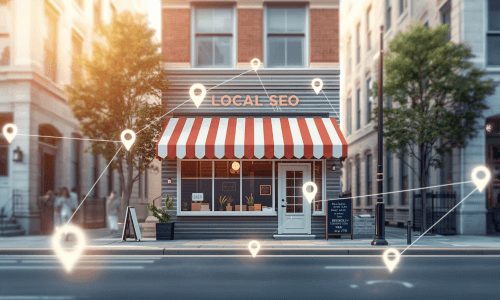
Local SEO is about helping people nearby find your business when they search online. It’s more location based.
When you optimize your local SEO as a small business owner, you make it easier for customers in your area to discover your business at the moment they need you.
It focuses on keywords like:
- “Physiotherapist in (your city)”
- “Best bakery in (your city)”

That makes every click on your website from search queries like that very valuable.
Keywords and content still matter, but in a local way. You use phrases customers actually type, including your area’s name. This could be on your homepage, service pages, or even blog posts that talk about local events or questions. The key is to tie your content from what you do and where you do it, search engines will connect you with the right local audience.
How To Do Local SEO For Small Businesses (Step-By-Step)
Now that we know what local SEO is, why it matters, and the differences from traditional SEO, it’s time to learn how to do local SEO for small businesses step-by-step.
Optimize Your Google Business Profile
Google Business Profile optimization is an absolute must. It shows up in local searches and in the Google Map Pack. A lot of people use it as their way to find your contact information. When your profile is optimized you’ll rank higher in the local pack.

You start by claiming your profile on Google Business. Verify it with your phone number, Google will send a PIN, which you’ll need to enter. Every field needs to be filled in as completely and correctly as possible. For categories, choose the most specific primary category.
Upload 20+ high-quality images of your store. Try to post weekly about specials, events, or holidays. Posts boost relevance and show your business is active. Use your targeted keywords naturally in your description.

NAP consistency & local citations
NAP means name, address, and phone. This is your business ID online. Citations are online mentions of your NAP, like on directories or apps. They matter a lot for local SEO because Google uses them to verify legitimacy and location. Inconsistent NAP confuses search engines, which will result in dropped rankings.

Google Map Pack favors businesses with 10+ consistent citations, even without links, citations signal relevance.
You can audit first to check if there are any inconsistencies in your NAP information. Aim for as many relevant citations as possible, and include social links and website.
Localized content and on-page optimization
Localized content speaks directly to all people in that area. On-page optimization ensures your site is focused on local intent. You create targeted pages for a certain keyword and service to convert visitors into leads.
If you have multiple locations or target multiple areas, create city-specific landing pages. Include your NAP in footer, local keywords in the meta title, H1, and meta description. Write blogs with neighborhood mentions, and events. Use local business schema markup.
Also, add alt text to images, H2s with locations, and internal links to other service pages. Optimize your mobile speed and design.
Reviews
Reviews matter for your small business because Google prioritizes volume, recency, and responses in their rankings. Also, reviews are social proof that can convince a person to buy or not buy.

Quality counts of course, a 5-star rating beats five 2-3 star ratings. Negative ones hurt your rankings, but responses show you care and control the damage done.
Ask people for a review post-service. Respond within 24 hours. Aim for 5-10 reviews monthly.
Focus on great service and the reviews will follow.
Local backlinks
Local backlinks are links from other websites in your area. They matter because they prove other businesses trust you in that area. This is a very positive signal to search engines and boosts local SEO authority.
High authority local sites drive trust and traffic to your website.
You can do this by asking for a guest post, sponsoring events, using directories, partnering with local businesses, etc.
Best Tools For Local SEO
There are some tools you can use for local SEO for small businesses. Here are my top 3 tools that I’d recommend:
- SEMrush
- BrightLocal
- Local Falcon
SEMrush
Use SEMrush if you want to dominate local SEO as a small business owner. It handles keywords, listings, and rankings all in one spot.
Your goals with SEMrush include finding local search terms, tracking rank positions, and managing reviews.

Here is what SEMrush can do for you:
- Discover high-volume local keywords.
- Track Google Map rankings.
- Manage business listings across directories.
- Monitor and reply to reviews.
- Audit your website’s on-page SEO.
BrightLocal
BrightLocal is perfect for local SEO cleanup and reputation building. It’s a great fit for building citations, tracking local rankings, and automating review requests.
With BrightLocal, you can:
- Build and fix citations across directories.
- Track rankings on maps.
- Monitor reviews and send automated requests.
- Generate custom reports.
- Audit Google My Business profile to spot quick wins.
Local Falcon
Local Falcon is perfect if you want to visualize your map pack strength and spy on your competitors. Your main goals are daily scans, competitor benchmarking, and AI tweaks for better local SEO performance.
Here is what Local Falcon can do for you:
- Check rankings.
- Schedule automated scans to track progress.
- Analyze competitors’s positions to steal their “strategy.”
- Get AI recommendations to boost your visibility.
- Export reports for client pitches or self-review.